
President Obama: “We Must Rethink Solitary Confinement”
Posted: January 26, 2016 Filed under: Uncategorized Leave a comment[S]olitary confinement has the potential to lead to devastating, lasting psychological consequences. It has been linked to depression, alienation, withdrawal, a reduced ability to interact with others and the potential for violent behavior. Some studies indicate that it can worsen existing mental illnesses and even trigger new ones. Prisoners in solitary are more likely to commit suicide, especially juveniles and people with mental illnesses.
I’ll let his moving piece in today’s Washington Post speak for itself. (For the record, I agree with him.)
Why Do I Blog About The Law?
Posted: January 19, 2016 Filed under: Uncategorized Leave a commentBecause of reader responses like this one: “i love getting these blog posts in my inbox. reading them makes me smarter; thanks for writing them.”
Dear Reader: I love writing the posts as much as you enjoy reading them. And I’m glad you find them worthy of your time. Thank you for your very kind words!
Does President Obama Care About The Law?
Posted: January 19, 2016 Filed under: Uncategorized Leave a comment“A recurring criticism of the Obama Administration is that it has embraced an inflated notion of executive power and disregarded legal constraints on executive-branch actions.” So writes Case Western University law professor Jonathan Adler on a post at The Volokh Conspiracy. His post describes an article by another author, Charlie Savage, that tests the validity of that criticism by citing eight examples in which the Obama Administration did not do something it really wanted to do because the law stood in the way:
- Not closing Guantanamo
- Not bombing the Bin Laden compound
- Not keeping Daqduq in American custody
- Not targeting al-Farekh
- Revealing, at last, the role of warrantless surveillance in evidence presented in certain criminal cases
- Not unilaterally bombing Syrian forces for using chemical weapons
- Continuing to enforce DOMA
- Not including parents of ‘Dreamers’ in DAPA
I commend Adler’s post to readers (particularly my conservative friends who love to bash President Obama for alleged executive power overreach).
The Ted Cruz Debate: An Example Of Why Interpretation Matters
Posted: January 15, 2016 Filed under: General Law, Uncategorized | Tags: natural born citizen, ted cruz 2 CommentsThe current debate over whether presidential candidate Ted Cruz is constitutionally eligible to hold the office to which he aspires demonstrates why arguments about how the federal constitution should be interpreted are so important. They are not mere semantic debates.
Article II § 1 cl. 5, of the United States Constitution sets forth three requirements for holding the office of President: He or she must be 35 years old, must have lived in the U.S. for 14 years, and must be “a natural born citizen, or a citizen of the United States, at the time of the adoption of this Constitution.” The last requirement is at the core of the Ted Cruz debate and this post.
Discussing The Death Penalty On “The Legal Eagle”
Posted: January 12, 2016 Filed under: Uncategorized Leave a comment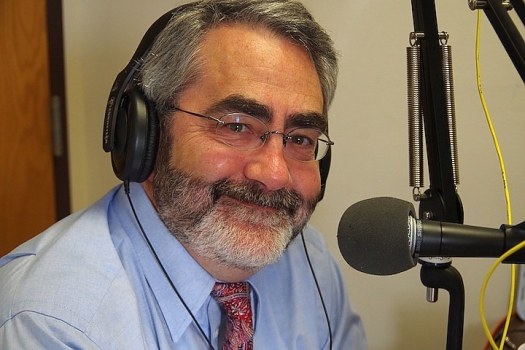
Lucy Gellman Photo
I had the pleasure of joining journalist Marcia Chambers this morning on “The Legal Eagle,” her weekly radio show on WNHH, the station owned and operated by The New Haven Independent. We discussed a range of issues, including the oral argument in the Connecticut Supreme Court last week concerning the death penalty; the case the U.S. Supreme Court heard yesterday concerning the First Amendment and public sector labor unions; and recently enacted police body camera legislation. Click here to listen to the show!
Is Ted Cruz A “Natural Born Citizen?”
Posted: January 11, 2016 Filed under: Uncategorized 1 CommentNot if one interprets the U.S. Constitution the way Cruz thinks it should be interpreted. See this interesting post over at the Volokh Conspiracy.
Handicapping The Outcome of State v. Peeler (Part Two)
Posted: January 10, 2016 Filed under: Uncategorized 1 CommentIn my preceding post I presented my thoughts on how the justices of the Supreme Court would cast their votes in State v. Peeler. In this post I discuss the various possible outcomes (“PO”). As I explain, there are a number of permutations beyond simply reaffirming or overruling State v. Santiago (Santiago II).
Handicapping The Outcome Of State v. Peeler (Part One)
Posted: January 8, 2016 Filed under: Uncategorized Leave a commentYesterday, the Connecticut Supreme Court heard oral argument in State v. Peeler, a case that presents the Supreme Court with the opportunity to reaffirm or overrule its decision last August in State v. Santiago (Santiago II), which abolished the death penalty. (I use the term Santiago II to distinguish it from an earlier decision in the same case, which the Court and parties refer to as Santiago I.)
I’ve written about the Santiago and Peeler cases at some length, and this post presumes the reader’s familiarity with my earlier posts. The purpose of Part One of this two-part post is to handicap the outcome of yesterday’s argument. In Part Two, coming soon, I will outline the various possible permutations of the Court’s eventual decision, which I do not expect for many months.
Kosher Marijuana?
Posted: January 5, 2016 Filed under: General Law, Uncategorized Leave a commentApparently so. Check out this interesting post over at the Volokh Conspiracy blog.
Where We Live: How “Perfect” Is The U.S. Constitution?
Posted: January 5, 2016 Filed under: Uncategorized Leave a commentThis morning’s program on WNPR’s “Where We Live,” hosted by John Dankosky, was a very interesting discussion about the U.S. Constitution. Guests Akhil Reed Amar (Yale Law School) and Adrienne Fulco (Trinity College) discussed a wide range of issues, including how the constitution should be interpreted; whether it is in need of amendment; current Second Amendment issues and more. Click here to listen to the program!
 Appealingly Brief!